• Blog
  • Shop
  • Podcast
  • Resources
  • About
  • Archive
  • Contact
  • Cart
  • Sign In My Account
Menu

The Gentleman Stationer

Vintage Living in the Modern World.
  • Blog
  • Shop
  • Podcast
  • Resources
  • About
  • Archive
  • Contact
  • Cart
  • Sign In My Account

Pen Review: Revisiting the Pilot FA Nib, This Time on the Pilot Custom 743 Verdigris Green

May 6, 2026

Back in 2017, I reviewed Pilot’s FA nib on the Custom 912 fountain pen, and while I came away from that experience impressed with the amount of flex that the nib offered, I couldn’t use it as an everyday writer. Personally, I’ve never “chased flex” in fountain pens - either vintage or modern - as I’m not a calligrapher and I don’t typically draw or otherwise practice lettering. That said, I do occasionally enjoy a soft fountain pen nib, such as when I want to journal in cursive or explore different inks. I’ve already written about how much I enjoy the soft fine-medium from this year’s Custom 74 “Lavender Fog” North American Exclusive, and I’ve also come to appreciate the FA nib on the larger Custom 743.

Pilot Custom 743 vs. Pilot Custom 912: Not the Same Nib

But isn’t Pilot’s FA nib the same on either pen? No. When we hosted our unfortunately-weather-abbreviated store event back in January, I had the opportunity to compare the FA nibs on the Custom 912 and Custom 743 side-by-side. Those who prefer a much softer and wetter writing experience closer to a true flex nib should opt for the Custom 912, whereas those who - like me - do more standard writing should probably choose the Custom 743. The two pens have different nibs, with the Custom 743 featuring a stiffer nib that also appears on the Pilot Custom 823.

The top writing sample (in Sailor Ink Studio 670) was done with the Pilot Custom 743 FA nib. The bottom writing sample was done with a Custom 74 Lavender Fog with a Soft Fine Medium (SFM) nib, in Tono & Lims Deep Field Laniakea.

What I Enjoy About My FA Nib and How I Use It

I chose this pen, and the FA nib in particular, for several reasons. First of all, this Pilot Custom 743 is a North American exclusive in Verdigris Green, and I wanted to be sure to get one before they are inevitably discontinued. In my mind, this special pen needed a fun nib, and after trying the Custom 743 version of the FA, I knew that I’d be able to use it regularly, even if not as an everyday writer. I’ve had this pen inked for two months, and here’s how I’ve put it to work:

  • Handwriting Improvement. One of this year's goals is to practice my cursive whenever I can, and it’s much more fun to do that with a nib that has some bounce to it and offers good line variation. With just light pressure, you can vary the line width of your up- and down-strokes, though I can’t overemphasize that like the “soft” nibs on the Pilot Custom 74, the FA nib should not be overflexed. It is possible to spring these nibs and cause irreparable damage. While I’ve not done any sort of scientific measurement, I would estimate that you can safely vary the line width on this pen 2-3 nib sizes (i.e., extra-fine to medium, or fine to broad).

  • Exploring Ink. The other benefit to line variation is that it can bring out the special properties in fountain pen ink, especially shading and shimmer. I’ve never focused as much on ink as I have on pens and paper, but since I receive more questions on ink these days (particularly in-store), I’ve felt the need to broaden base of knowledge on how different inks work in different pens, and with different pen and paper combinations.

  • Testing Paper. Similarly, in my line of work I need to know what kind of paper holds up well to wetter nibs, and how far I can push certain papers to the point where they will start to feather or bleed. You can really test just how “fountain pen friendly” certain paper is by pairing wet inks with soft nibs, even if sometimes the point of failure is well past what most people require for everyday use.

Chasing Nibs and Not Necessarily Pens

I remarked in last week’s post that over time, the focus of my pen use/collecting has reoriented towards nibs rather than pens. Sure, it’s fun to collect a new custom material or a favorite model in a new color, but most of my personal purchases over the past two years have been driven by whether the nib offers a unique writing experience. My current collecting “grail” is to fill out a set of all the Pilot specialty nibs over time, in unique pens if possible. Recently I’ve added the FA pictured here, and I’ve also been loving the WA (Waverly) nib as a smooth everyday writer. Just wait until you read the recap from my upcoming trip to Japan, because this collection is about to get a lot bigger. :)

Further Reading

You can read more about the Pilot Custom Series, including different nib options, in this overview of the various Pilot “Custom” models. As we’ve grown our own store, we offer many of these Pilot pens directly, including certain Custom series models, and we have a couple of the Verdigris Green Custom 743s remaining in stock as of the time of publication.

The Gentleman Stationer is supported by purchases from the T.G.S. Curated Shop and pledges via the T.G.S. Patreon Program. You can also come visit us at our physical stationery store in Nashville, Tennessee.
In Pens Tags Pilot Custom 743, Pilot FA Nib, Pen Review
Comment
Uni EMOTT Marker Selection with Set of Different Colors

New Arrivals: Uni EMOTT Fineliner Sets in 12 Different Color Palettes

May 5, 2026

We’re fans of fineliners around here, mainly because they offer a softer writing experience that - like fountain pens - requires very little writing pressure. The problem? Unless you opt for refillable fineliners like the Tom’s Studio Lumos series or single-use options like the Kakimori Colour liners, it can be difficult to find many color options in markers designed for writing. Uni’s EMOTT series adds something new to the market, in that these .4mm fineliners are designed for a firmer feel and increased tip durability. Yes, you can use them for art and drawing, but they’re also excellent for writing and applications like planner layouts.

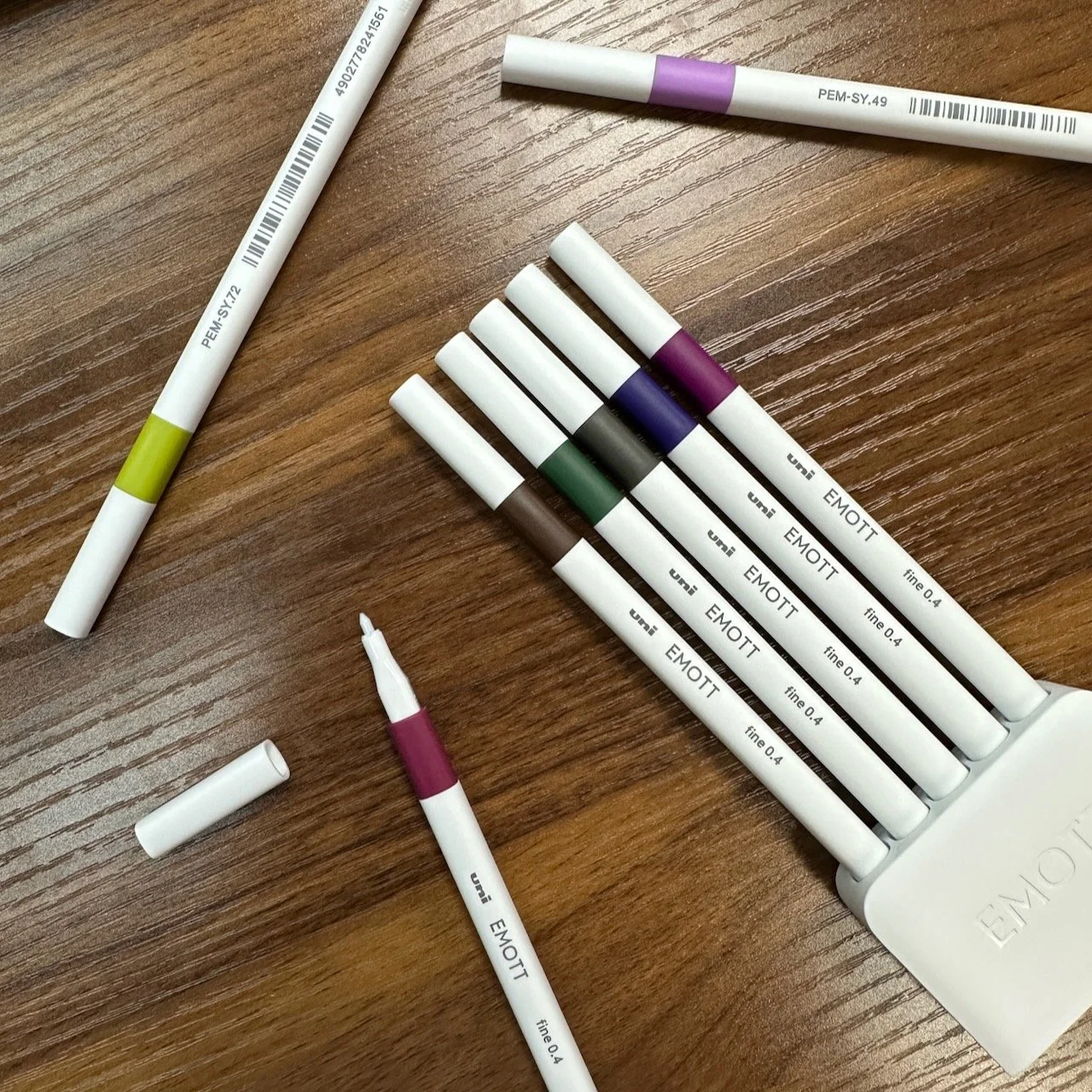
The EMOTT’s .4mm fineliner tip.

We currently stock 12 different EMOTT fineliner sets, each with its own color palette. We also carry an expansive selection of other Uni pens and Uni pencils in our shop, including recently arrived restocks of the Uni Jetstream pens and the Uni Kuru Toga mechanical pencil.

We will be open normal hours this week in our Nashville shop, from 1-6pm Thursday and Friday, and from 10am-6pm Saturday. Stop by to see these and more in-person!

In Pens Tags Uni EMOTT, Uni Pens, Fineliner Pens
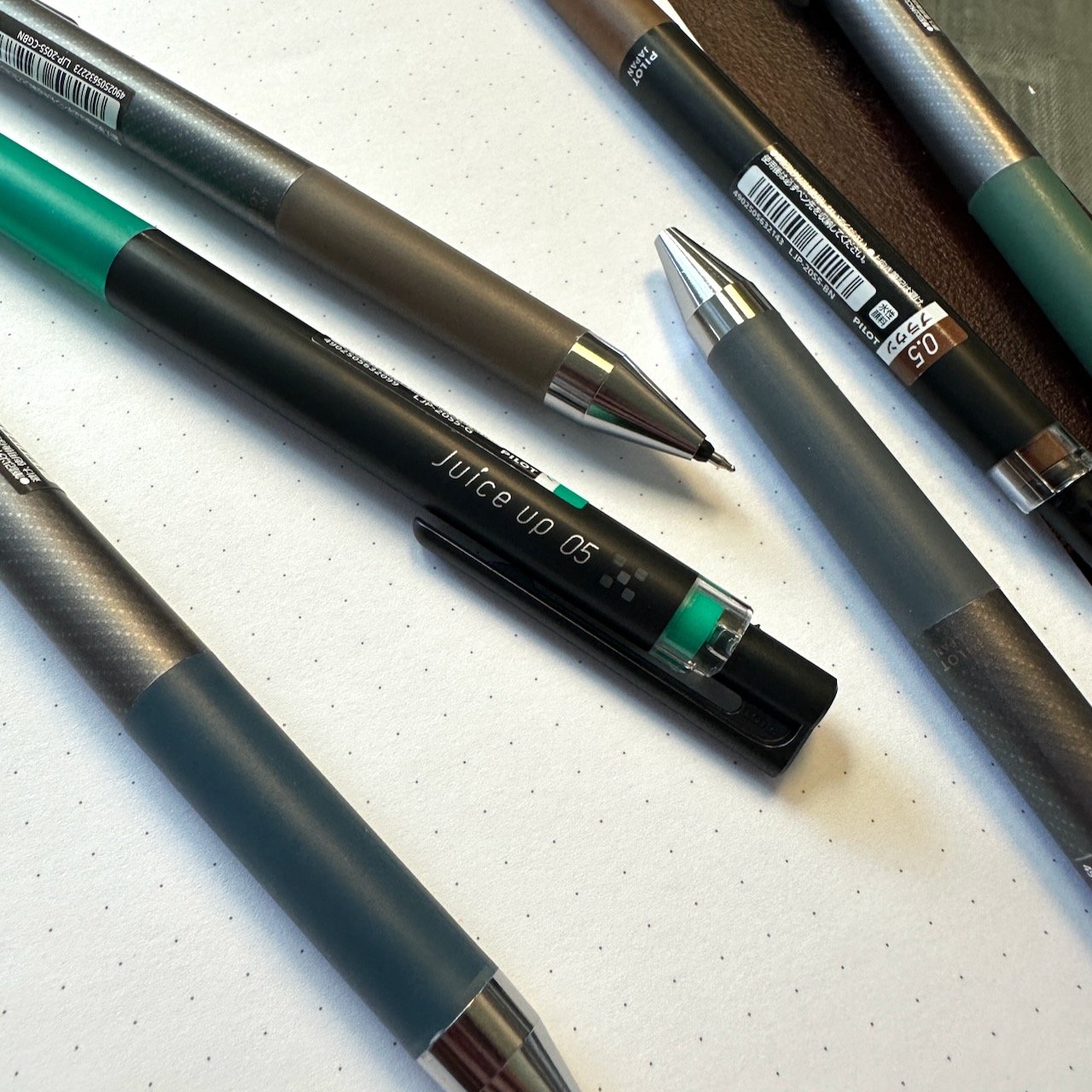
Pilot Synergy Tip in Juice Up Pen

Pen Review: The Juice Up, the Juice Plus, and Pilot's "Synergy Tip"

April 18, 2026

I first discovered Pilot’s “Synergy Tip” gel pens a few years ago, when I picked up a pack of “Synergy Clicker” Frixion pens. This innovative tip format immediately improved my writing experience with the Frixion pens, reminding me of the smooth-writing liquid ink “V” rollerball series that I’ve always loved, with the added precision of the Hi-Tec-C gel ink. Of course, given the limitations of erasable Frixion ink, the pens weren’t quite as smooth or dark as I would’ve liked, so I kept looking. I soon discovered that Pilot also uses the Synergy Tip in their excellent “Juice” gel pen range, available in the U.S. as Japanese imports (including now from T.G.S.!). The two main options are the “Juice+” and the “Juice Up” lines, both of which use the same cartridge, with the primary differences being color range and barrel design.

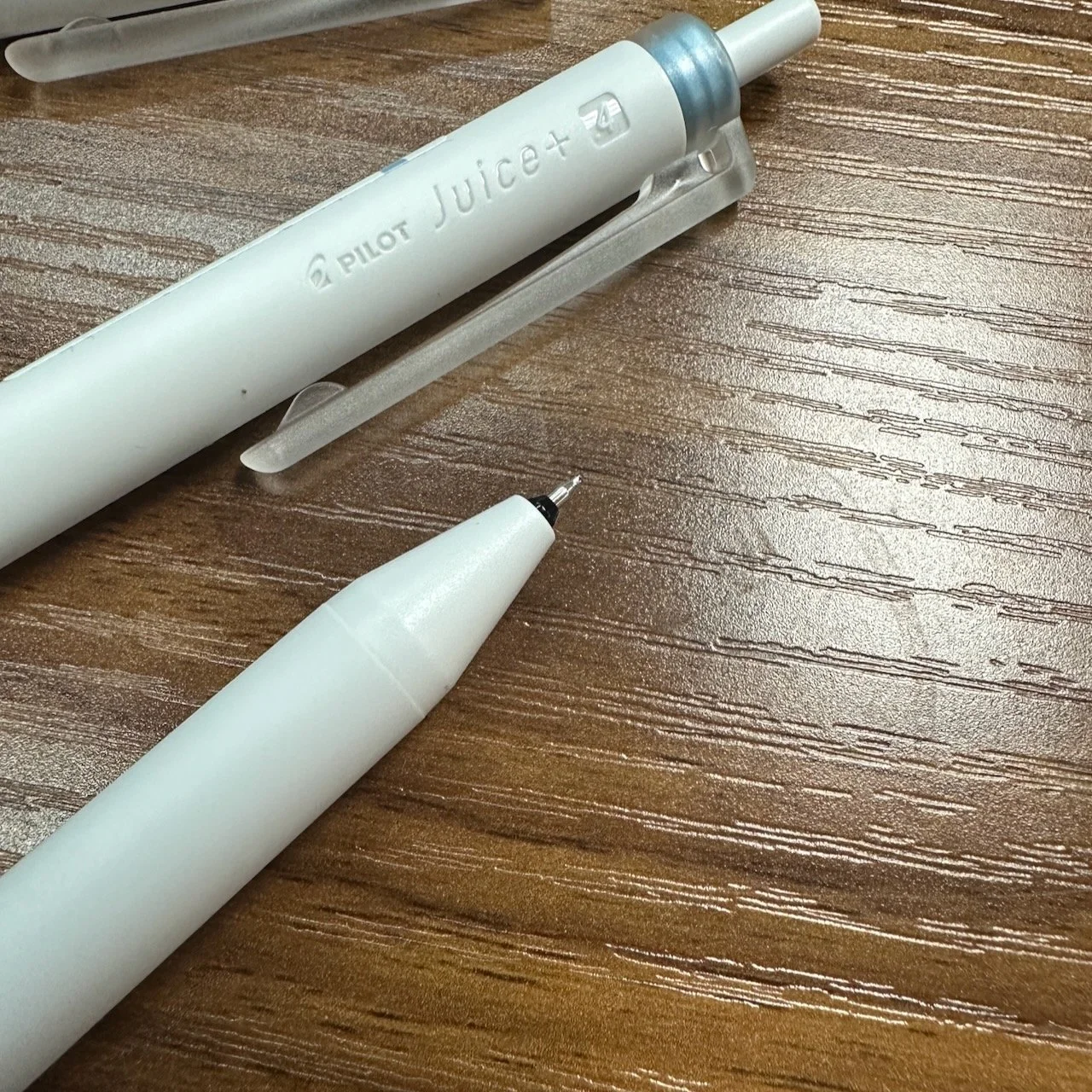
Pilot Juice Plus Gel Pen Showing Matte White Barrel with Synergy Tip

The Pilot Juice+ / Juice Plus features a matte white barrel that’s lighter-weight than the heftier Juice Up.

Why I Like the Pilot “Synergy Tip” Gel Pens (Juice+ and Juice Up)

  • You get most of the precision of the Hi-Tec-C with the smoother writing experience of a conical metal tip like the G2 or the Signo DX. The difference is especially noticeable when writing at a lower angle, which is where the Hi-Tec-C can sometimes give me trouble. In my experience the Juice pens are much less prone to clogging and premature drying out than the Hi-Tec-C, which is the primary downside to Pilot’s classic needle-tip gel pen.

  • The Synergy Tip lays down a clean line, with none of the “blobbing” you can sometimes see in a standard Pilot G2 or standard Zebra Sarasa (not the “Sarasa Clip” series). The gel ink used in the Juice pens contains pigment that renders it “water-resistant”, per Pilot, so while it probably won’t survive a thorough soaking, it’s at least waterproof enough to withstand a splash from a spilled drink, and to allow you to highlight over the ink without smearing.

  • I love the bolder Juice colors and expanded range. Right now, I think my favorites are the “Glossy” series of five dark colors that you can find within the Juice Up line.

As you can see, the Juice Up highlights really well, with minimal smearing. The highlighter used here is the excellent Pilot Kire-Na.

Takeaways and Where to Buy

If you’re looking for a needle-ish tip gel pen that writes reliably and comes in a broad range of colors, I highly recommend both the Juice Up and Juice Plus (Juice+) line. We currently stock the .4mm and .5mm Juice Up pens, as well as the .4mm Juice Plus, in our own shop, and will be looking to add more as we grow. I did want to add a note on refill compatibility - you often see the Pilot Juice refills being advertised as “G2” compatible, meaning that they will fit pens that accept the Pilot G2 cartridge. While that may be true for the standard (conical-tip) Juice pens or older versions, the current Synergy refills appear to use a cartridge that is slightly shorter. For example, I was able to use a Glossy Red Juice Plus refill in a Sunderland MK1 (which accepts a standard G2) but I had to wrap a bit of washi tape around the end of the Synergy refill to add length. Otherwise the refill works perfectly with zero tip wiggle or other annoyances.

The Gentleman Stationer is supported by purchases from the T.G.S. Curated Shop and pledges via the T.G.S. Patreon Program. You can also come visit us and try these and other pens in person at our physical stationery store in Nashville, Tennessee.

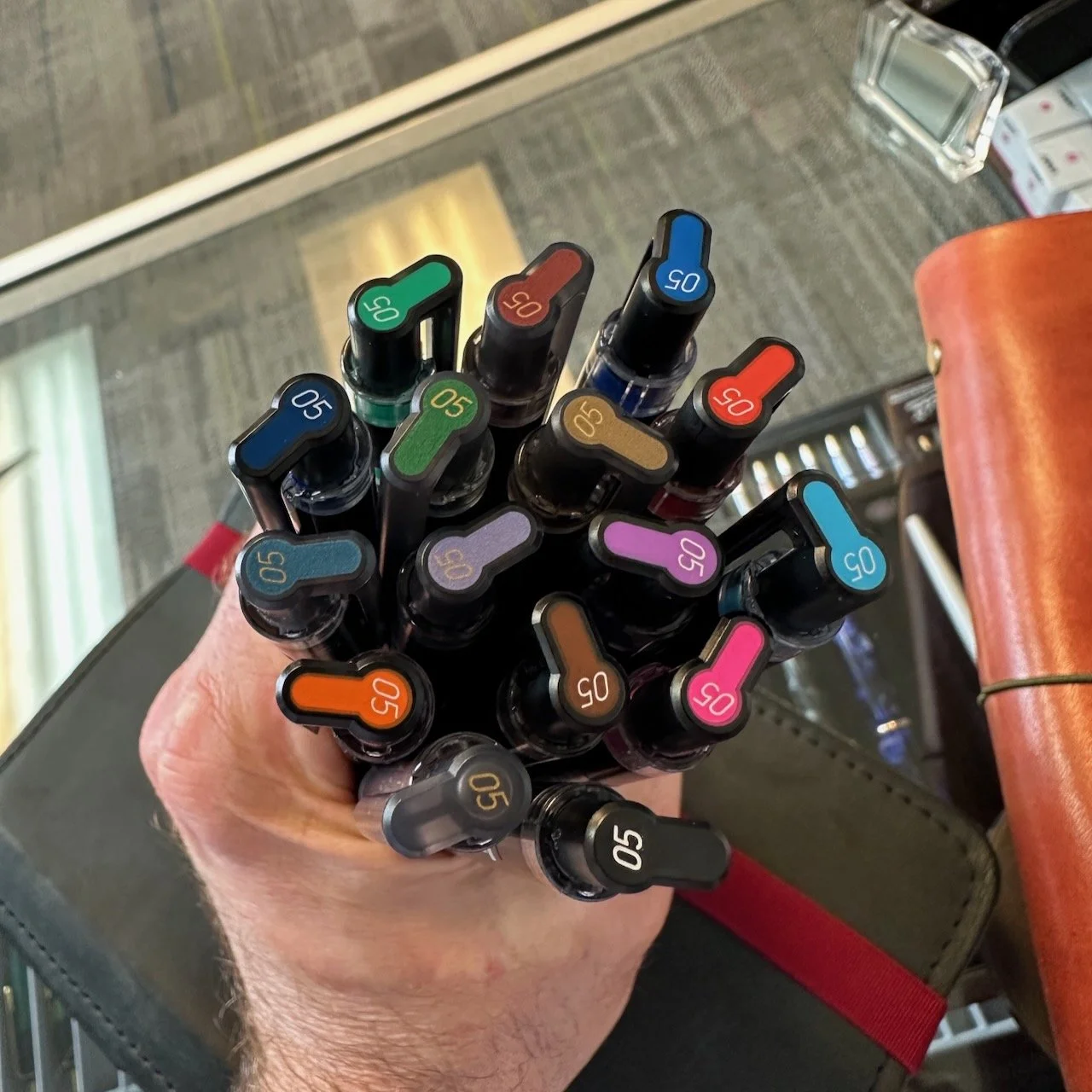
Pilot Juice Up Showing 15 Colors

All 15 Colors of the Pilot Juice Up!

In Pens Tags Pilot Synergy Tip, Gel Pens, Pilot Juice, Pilot Juice+, Pilot Juice Up
1 Comment

First Impressions: Hands-on with the Uni Zento Signature!

April 11, 2026

Ok, so I finally got my hands on a Uni Zento Signature - Uni’s latest “it” gel pen that flies off shelves so fast in Japan that it hardly ever makes it’s way into the U.S. market, and when it does, it often appears at grossly inflated secondary market prices. (I’ve seen these pens priced as high as $200+, but fortunately as they become more available this degree of silliness is less common.) I’ve been trying to get my hands on a Zento Signature for about a year, and when Vanness Pens obtained a (very) small shipment for the California Pen Show in February, I managed to snag one of the black ones in the .5mm tip size. After a few weeks of use, here are my initial impressions.

What I Like About the Uni Zento Signature

  • Magnetic Cap. The Zento Signature features a magnetic cap which closes and posts securely. This feature alone makes the Signature an excellent pen for everyday carry. Standard “click” gel pens can accidentally deploy in your bag or pocket, causing a mess. You don’t have that issue with the Signature.

  • Sturdy Clip. The Signature features an upgraded metal clip that’s a bit heavier duty than the wire clip on the standard and Flow pens. I haven’t had the pen long enough to know whether it will make a real long-term difference in terms of durability, but it feels secure and does lend the pen a higher-end look.

  • Matte Grip. The grip section on the Zento Signature has a matte texture that reduces slippage in the hand. The metal barrel on the Zento Flow might be a touch slick for some people. If you’re writing outdoors, in a variable travel environment, or if you tend to have sweaty hands, the Signature is a good choice.

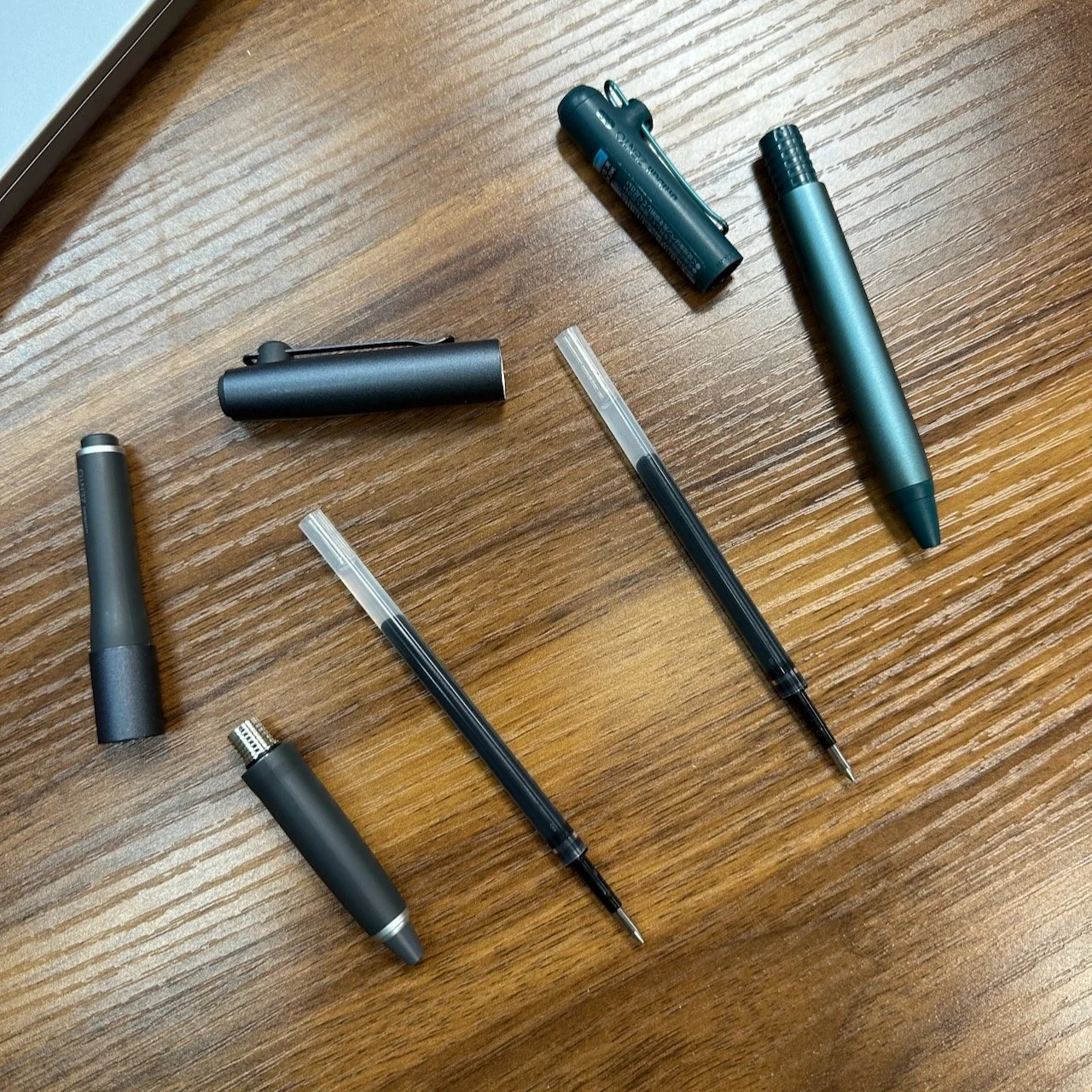
  • All-Metal Construction. The Zento Signature feels durable due to the nearly all-metal construction, including interior metal threads. There’s even an o-ring to prevent leakage if a refill goes bust.

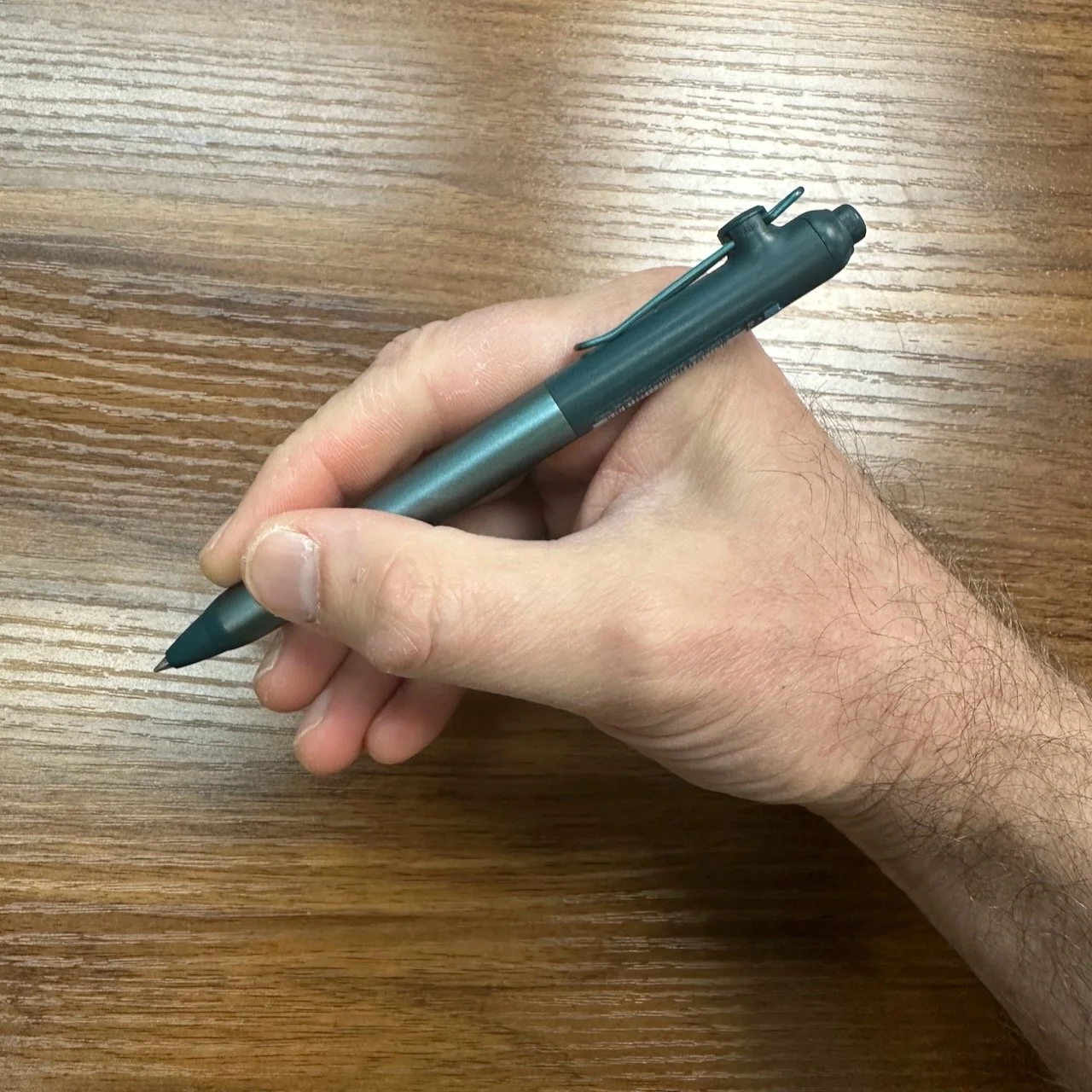
The Zento Signature posted in-hand. The grip section is comfortable, though I find the overall shape of the pen a touch short for my hand.

The Uni Zento Flow, which is a traditional click pen format with a lower aluminum barrel.

Do I Prefer the Zento Signature Over the Zento Flow? A Few Considerations that have me leaning towards the Zento flow

  • Price Point. Even at the standard pricing ($30), the Zento Signature is nearly 3x more expensive than the Zento Flow, and 10x more expensive than the standard Zento. All three pens use the same refill, so in order to justify the price difference, you need to really like the format. I would NOT suggest that anyone pay $100-200 on the secondary market for a Zento Signature under any circumstances - it was never intended to be sold at this price point and the value proposition is not there.

  • Balance. I don’t consider the Zento Signature unbalanced, but for longer writing sessions the Zento Flow fits my hand better. Posted, the Signature is only slightly shorter, but the difference in weight and balance feels more pronounced. I think I prefer the more front-weighted Flow overall.

  • Hype. The stationery industry goes crazy over certain products from time to time, and I’m usually able to ignore the hype but with the Zento Signature it can be impossible. This pen has drawn so much attention that I dislike using it in public and carrying it with me at shows and meetups due to the number of people constantly asking whether I’m willing to sell it. (I’m not.) In my opinion, this pen is nice but does not justify the level of social media FOMO-driven hype that it receives.

Most of the price point of the Zento Signature goes into the metal barrel. As you can see, the barrel threads are metal as opposed to plastic, which suggests that the pen will be more durable over time as one would expect for the price point. That said, both pens use the same refill, so your writing experience is nearly identical.

Further Reading on the Uni Zento Lineup

I’ve previously reviewed the standard Uni Zento and the “mid-tier” Zento Flow, which uses the same refill and features an upgraded metal barrel in five different finishes. I think the Zento refill is excellent, and consider these pens exceptionally good everyday writers for those who value a smooth writing experience. The Zento is designed to be “low friction”, and performs as advertised. At the end of the day, is the coveted Zento Signature 2-3x as good as the Flow? If you’re just looking to write with a Zento, probably not, but if you are looking for a pocket-carry EDC pen with a magnetic cap, at $30 the Zento Signature is a reasonable choice as long as you can find one at standard pricing.

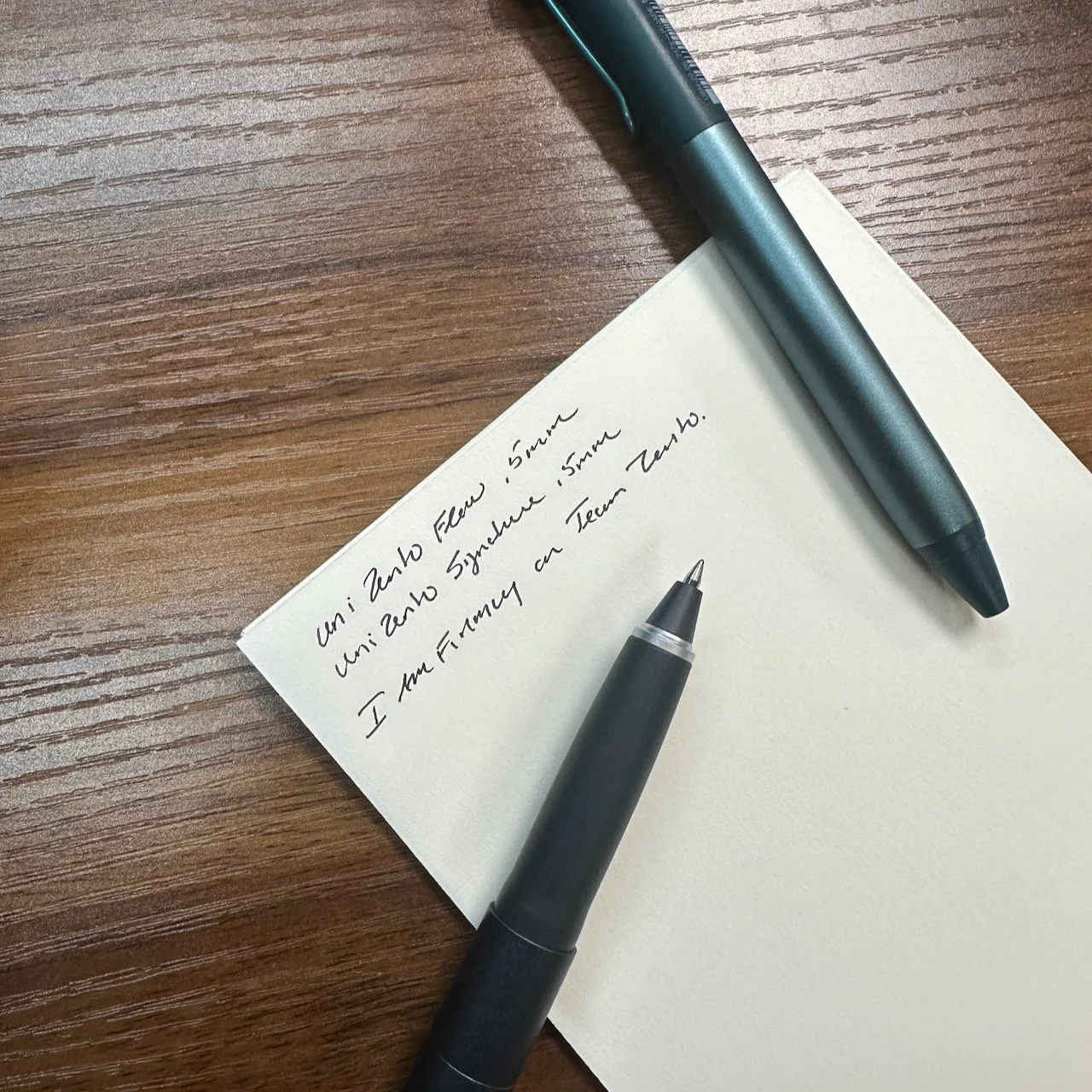
Uni Zento Writing Sample .5mm

We currently have a fairly large selection of Standard Zentos and Zento Flow pens in stock in our shop, including the cool “Birch” Flow that pairs a white upper barrel with etched aluminum. We recently added some .7mm options for those who prefer a wider tip size. Unfortunately, we do not have any Zento Signatures available for sale as they remain largely unavailable in the U.S. Our friends at Vanness Pens are also currently sold out. Please note that I am not interested in selling my personal pen and generally do not respond to emails and comments regarding purchases from my personal collection. Thank you for understanding!

The Gentleman Stationer is supported by purchases from the T.G.S. Curated Shop and pledges via the T.G.S. Patreon Program. You can also come visit us at our physical stationery store in Nashville, Tennessee.
In Pens Tags Uni Zento, Uni Zento Flow, Uni Zento Signature, Pen Review
Comment

Pen Review: The Pentel Sign Pen (Craft Design Technology Version)

February 28, 2026

I have a soft spot for pens that have remained essentially unchanged for 60+ years, including the Lamy 2000, the Pilot Capless Series, and even less expensive pens like the one I plan to review here: the Pentel Sign Pen. Introduced in 1963, the Sign Pen is famous for its moderately flexible tip that allows for expressive line variation while remaining just firm enough to use for everyday writing. Long a favorite of calligraphers, I had written this one off as an “art marker” that wouldn’t be suitable for my more everyday needs. Let’s say I’ve had to reconsider.

An example of how I’ve been using these pens for my personal planner layouts.

Expanding My Japanese Fineliner Repertoire

Back in December we brought an assortment of Craft Design Technology products into the shop, which included CDT’s versions of a wide range of Japanese stationery items that I had never tried before. This shipment included not only the Sign Pens, but other unique finds including the Pentel Tradio, the Pilot Frixion 3 multi pen, and paper items such as the CDT Memo Rolls and Desk Note Bagasse notebooks. Of all the new additions, however, the Sign Pens and the Tradios were my favorites.

The brush/marker tip is adequately firm for writing, and the colors are quite vibrant. Writing sample here is shown on the CDT Desk Note (Large), which contains ink-friendly, sugarcane-derived Bagasse paper.

I’ve long been a proponent of fountain pen users trying out fineliners as an “everyday” alternative. Fineliners add a degree of expressiveness (meaning line variation) to your handwriting, and have a soft feel that, like a fountain pen, requires very little writing pressure. The Pentel Tradio is actually modeled after a fountain pen, but with a stiffer tip that will feel familiar to U.S. users accustomed to standard felt-tip pens and markers. The Pentel Sign Pen invokes a traditional Japanese brush pen, with a softer tip capable of more significant line variation. As a result, the Sign Pen has become a favorite for calligraphers and artists, though the tip remains firm enough that you can use it for standard handwriting and journaling.

The T.G.S. back-office work table.

So how do I use my own set of Pentel Sign Pens? I’m no calligrapher, and I long ago allowed my art skills to lapse, but I’ve thoroughly enjoyed these pens as journaling and planning tools. The tip is flexible enough to go from a relatively fine line to a bolder marker-esque line, making them useful for drawing layouts. I’ve also been trying to improve my cursive and reduce the amount of pressure that I use while writing by hand, so these are great given that the ink flows similarly to a fountain pen. Unlike many markers, the Sign Pens show relatively little bleedthrough and feathering on decent papers, with the ink behaving similarly to fountain pen ink in that regard.

The Pentel Sign Pen features color-coded end caps so that you can conveniently locate the pen you’re looking for.

Takeaways and Where to Buy

I keep a jar of the Craft Design Technology Pentel Sign Pens on the main worktable in the T.G.S. back office - that’s how much I’ve grown to love these things. I’ve always been a fan of fineliners and other fine-tipped markers, but the Sign Pen is different enough that I sometimes feel as though I’ve discovered an entirely different product category! I have one of the 10-pen sets, and I even kept the zippered pouch so that I can take these with me when I travel. They make an excellent addition to a journaling kit if you like to write in different colors but don’t feel comfortable bringing multiple fountain pens and inks.

If you opt for one of the multi-packs, be sure to save the pouch, as it’s quite nice for travel. (Or you can upgrade to one of the CDT Custom Leather zipper pouches.) :)

As noted above, we stock the Sign Pen in the exclusive Craft Design Technology mint green finish. For those unfamiliar with CDT, it’s a Japanese design house that collaborates with various stationery manufacturers on their own unique versions of classic items, including Pentel items such as the Tradio, Sign Pen, Energel, Sharp Kerry, and even more paper products and desk accessories. Most of their releases incorporate some version of their signature green colorway.

The Gentleman Stationer is supported by purchases from the T.G.S. Curated Shop and pledges via the T.G.S. Patreon Program. You can also come visit us at our physical stationery store in Nashville, Tennessee.
In Pens Tags Craft Design Technology, Pentel, Pentel Sign Pen, Fineliner Pens, Brush Pens
Comment
Older Posts →
Store Hours and Events
Shop T.G.S. Online
Updated 2026 "Best Pens" Guide
No results found
On The Paper Trail: Live In Nashville Event Tickets Now Available!
Hierarchies of Fountain Pen Friendly Paper

Join Our Patreon!
Subscribe to the TGS E-mail List

Featured Posts

Featured
Five-Foundational-Fountain-Pens.jpeg
April 22, 2026
T.G.S. 12th Anniversary: 5 Fountain Pens Everyone Should Experience
April 22, 2026
April 22, 2026
Pilot-Custom-Series-Pens-overview.jpg
March 14, 2026
The Pilot "Custom" Series: An Overview of Some of My Favorite Fountain Pens
March 14, 2026
March 14, 2026
Pentel-Sign-Pen-Cover.JPG
February 28, 2026
Pen Review: The Pentel Sign Pen (Craft Design Technology Version)
February 28, 2026
February 28, 2026
The Gentleman Stationer RSS

View Cart

© Digital Divide Media, LLC, 2014-present.

All content is the exclusive property of Digital Divide Media, LLC, d/b/a The Gentleman Stationer, including “The Gentleman Stationer” website and trademark, and should not be reproduced without express written permission.  All rights reserved.

All content containing paid advertising, affiliate links, or sponsored content will be plainly disclosed by a disclaimer when/if featured.

Contact Information

Store Shipping Policy and Return Policy

Privacy Policy

Cookie Policy

Terms and Conditions

Powered by Squarespace